Welcome to the Crow’s Nest!

Featured

Did you know that crows have the highest brain-to-body ratio among all bird species? It’s true! Okay, I promise to keep the gloating to a minimum. The true intention of the Crow’s Nest is to spread the word on the exciting activities in climate preparedness in New Hampshire. Think of this as an interactive newsletter designed to keep you informed as well as to provide you an opportunity to share your thoughts and ideas on climate change issues. News items will generally include a question or two for you to reply to. You can find our latest posts on the posts page or in the sidebar (to the right). I invite you to return to the Crow’s Nest every month to participate and learn from one another. Until next time, “CAW!”

-Connie Crow

Hampton-Seabrook Estuary COAST Project Local Stakeholder Group Meeting to be Held on Thursday, June 28

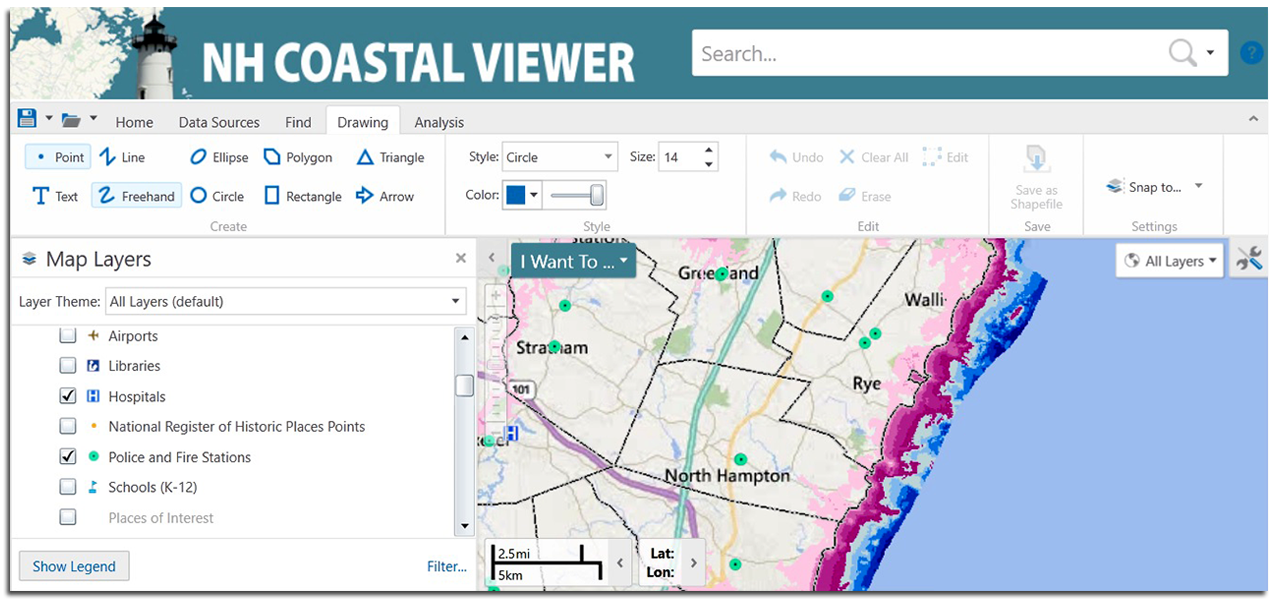
Over the past 8 months, the CAW team has been working on a project with the towns of Hampton, Hampton Falls and Seabrook to evaluate the costs and benefits of adaptation options to reduce coastal flooding in the Hampton-Seabrook Estuary, including the cost of doing nothing.  The project has used a decision support tool called COAST (Coastal Adaptation to Sea Level Rise Tool), developed by the New England Environmental Finance Center, to help the three towns understand coastal flooding risks and associated economic impacts.  The information can help communities choose the most cost-effective solutions to keep people, infrastructure, and other important locations in town safe from flooding.  

The third Local Stakeholder Group meeting will be held on Thursday, June 28 from 6 – 8:30 pm at the Hampton Falls Town Hall. During this meeting, the project findings and selected adaptation options will be presented. Learn more about the project and meeting details in the COAST flyer.  

This study is funded by an Environmental Protection Agency Climate Ready Estuaries grant to the Piscataqua Region Estuaries Partnership. Mapping and modeling work has been done by Dr. Sam Merrill of the New England Environmental Finance Center.   


From the Yale Project on Climate Communication: “Extreme Weather, Climate & Preparedness and the American Mind”

The lastest news from the Yale Project on Climate Communication reports the results of a survey on how American’s perceive and prepare for extreme weather/natural hazards.

Some Highlights:

  • 82 percent of Americans report that they personally experienced one or more types of extreme weather or a natural disaster in the past year.
  • 35 percent of all Americans report that they were personally harmed either a great deal or a moderate amount by one or more of these extreme weather events in the past year.

 Read the full report.

The Portsmouth Coastal Resilience Initiative Seeks Consultant

The Portsmouth Coastal Resilience Initiative will kick off this spring!

The goal of the project is to assess and increase the City of Portsmouth’s resiliency to extreme weather events and climate change.

Increased intensity and frequency of coastal storms and sea level rise has the potential to result in extensive property damage and costly repairs for the City as well as residents and businesses. Of particular concern is the potential for irreplaceable historic property loss in the Historic District, portions of which are located in high hazard areas. Portsmouth’s tidal wetlands and areas of salt marsh situated in the Lower Piscataqua River estuary have the potential to be altered by increased frequency and duration of salt water inundation as well as erosion caused by changing sea levels, larger storm surges, and more severe storms.

An experienced consultant is needed to work on a vulnerability analysis and develop recommendations to improve resiliency that can be easily integrated into the Master Plan update process, the building code, and the Capital Improvement Plan. Outreach to the community is also a part of the initiative. Portsmouth received a New England Municipal Resiliency grant from the Gulf of Maine Council on the Marine Environment and the Northeast Regional Ocean Council for this project.

Requests for proposals (RFP) are due by 2 pm on April 30. Read the full RFP.

From ScienceDaily — U.S. Records Warmest March; More Than 15,000 Warm Temperature Records Broken

ScienceDaily (Apr. 10, 2012) — Record and near-record breaking temperatures dominated the eastern two-thirds of the United States and contributed to the warmest March on record for the contiguous United States, a record that dates back to 1895. More than 15,000 warm temperature records were broken during the month. Read the full article.


Rising Sea Levels Seen as Threat to Coastal U.S., article in New York Times

Rising Sea Levels Seen as Threat to Coastal U.S, New York Times, March 13 

Excerpt from the article:

“Insurance companies got out of the business of writing flood insurance decades ago, so much of the risk from sea level rise is expected to fall on the financially troubled National Flood Insurance Program, set up by Congress, or on state insurance pools. Federal taxpayers also heavily subsidize coastal development when the government pays to rebuild infrastructure destroyed in storm surges and picks up much of the bill for private losses not covered by insurance.

For decades, coastal scientists have argued that these policies are foolhardy, and that the nation must begin planning an orderly retreat from large portions of its coasts, but few politicians have been willing to embrace that message or to warn the public of the rising risks.

Organizations like Mr. Ebell’s, even as they express skepticism about climate science, have sided with the coastal researchers on one issue. They argue that Congress should stop subsidizing coastal development, regarding it as a waste of taxpayers’ money regardless of what the ocean might do in the future.”


Coastal Adaptation to Sea-Level Rise Tool (COAST) in Hampton-Seabrook Estuary Project Update

Local officials from Hampton, Hampton Falls, and Seabrook joined with the Coastal Adaptation Workgroup (CAW) and Sam Merrill from the New England Environmental Finance Center on February 23 for the second of a three-phase climate preparedness project. The communities and CAW are working with Sam to use the Coastal Adaptation to Sea-Level Rise Tool (COAST) for cost-benefit analysis to plan for future climate impacts.  At the meeting, Seacoast residents considered the costs of local planning decisions under various climate scenarios, and made informed decisions about which local assets (e.g., critical facilities, natural resources, populations) to protect relative to the costs of future climate impacts.

Moving forward, the Coastal Adaptation Workgroup, working with Sam Merrill, will develop recommendations that describe the most appropriate adaptation strategies relative to each community and the assets they have chosen to protect. This will be the focus of the next meeting to take place later this spring.

This study is funded by an Environmental Protection Agency Climate Ready
Estuaries grant to the Piscataqua Region Estuaries Partnership, a CAW member.

NHCAW Members Attend Legal Solutions Conference

On February 10, some members of the NH Coastal Adaptation Workgroup (NHCAW) attended the Legal Solutions to Climate Change Adaptation in Connecticut conference sponsored by CT SeaGrant.  Although the focus of this legal research centered upon southern New England and northern Mid-Atlantic states, the solutions, approaches and local case studies were relevant to the impacts of climate change we see today in New Hampshire coastal communities.

Presentations from the conference are available at http://seagrant.uconn.edu/climatelaw/.

Our take home messages from this event were:
- Municipalities have a responsibility to protect public health and safety from the impacts of a changing environment, as prescribed in Constitutional Amendments #5 and #10 (based in public trust doctrine and defense against “takings claims”).
- Legal precedent exists to support preservation and maintain public access to the shoreline.
- Many coastal state are requiring information about flood and erosion hazards for coastal properties at the time of sale.

New Water, Weather, Climate and Community Workshop March 29!

Water, Weather, Climate and Community Workshop IV: Climate Change in the Piscataqua/Great Bay Region: Past, Present, and Future

Thursday March 29, 2012 from 5 – 8:00 PM
Hugh Gregg Coastal Conservation Center at the Great Bay Discovery Center
At Sandy Point in Greenland, N.H. Directions: http://www.greatbay.org/about/facilities.htm

Please join the NHCAW in the fourth of a series of community conversations about climate and community preparedness for severe weather events. This workshop is designed for coastal community volunteer board, committee, and municipal staff members interested in land use, infrastructure, emergency management and planning. Community organizations, business owners and residents are welcome.

RSVP by March 23, 2012 to Steve.Miller@wildlife.nh.gov
There is no charge for the workshop, but space is limited. A light dinner will be served.
To RSVP include your name, affiliation, and contact information.

Download Workshop Flyer


Are You Ready for the Next Storm?

Following the second warmest November on record, over 100 people gathered on December 2, 2011 for the inaugural New Hampshire Climate Summit. The Great Bay National Estuarine Research Reserve hosted the day. The agenda was jampacked with presentations and dialogue from 8:30 to 4:30. Dr. Cameron Wake of the University of New Hampshire opened the day with an introduction to a new local climate assessment: “Climate Change in the Great Bay/Piscataqua Region: Past, Present and Future.”

Dr. Wake was followed by a dozen other presenters throughout the day. Topics ranged from municipal and regional projects and challenges to green infrastructure, needs assessments to hydrologic and economic modeling projects. There is a great number of exciting climate projects going on in New Hampshire!
 
The tremendous turnout from in and around the Seacoast enabled a very thoughtful town hall-style discussion following each presenter. Those in attendance ranged from municipal officials to regional planners, state and federal agencies to local conservation groups, scientists and engineers to nongovernment and nonprofit organizations. The participation and hallway discussions throughout the day reflected the growing network of people working to cope with the many challenges ahead. It was clear that action at all levels is needed to prepare for increased flooding, warmer temperatures and species shifts.
 
So, as Dr. Wake asked the audience, “Are you ready for the next storm?”